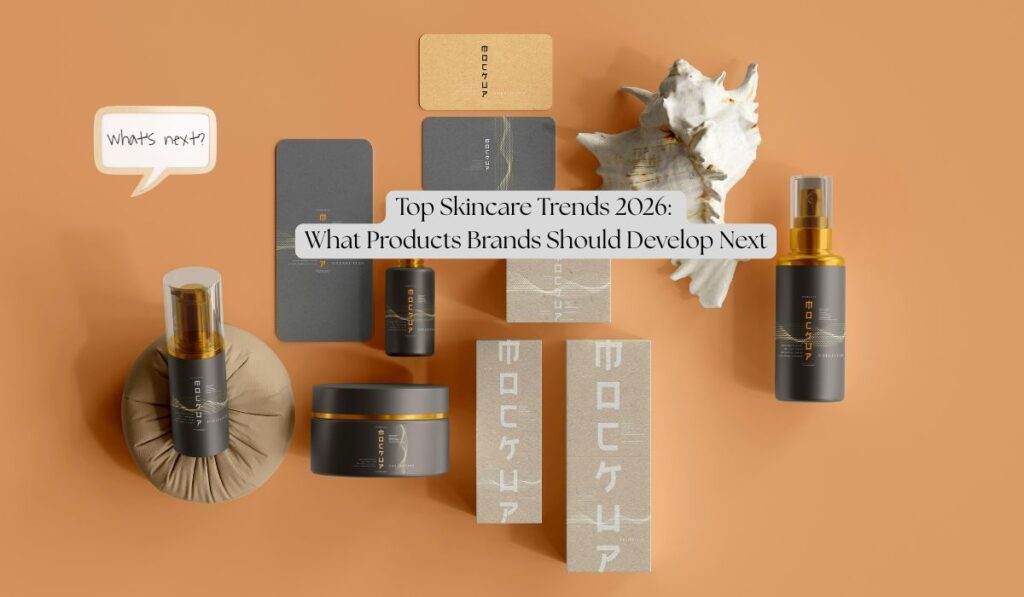
The global skincare industry in 2026 continues to evolve rapidly, driven by ingredient innovation, consumer awareness, and demand for more functional and personalized products. For emerging and established beauty brands, understanding skincare trends 2026 is essential for successful product development and long-term competitiveness.
Unlike previous years where trends were mainly marketing-driven, 2026 trends are heavily influenced by formulation science, sustainability requirements, and manufacturing efficiency.
For brands working with a professional OEM skincare manufacturer, trend alignment is not only about marketing—it directly impacts product viability, cost structure, and scalability.
1. Functional Skincare Is Replacing Basic Skincare
Consumers are no longer satisfied with basic hydration or cleansing. In 2026, the market is shifting toward functional skincare products that deliver measurable results.
This includes:
- Barrier repair creams
- Anti-aging peptides serums
- Acne-targeted solutions
- Skin microbiome support formulas
Brands entering the market should focus on performance-based claims rather than simple cosmetic benefits.
From a manufacturing perspective, functional products require stronger formulation capabilities and more advanced cosmetic R&D support, which is why choosing the right skincare manufacturer is critical.
You can learn more about how formulation impacts production structure here: How Much Does It Cost to Manufacture Skincare Products in 2026?
2. Acne Care Products Continue to Grow Rapidly
One of the most consistent growth categories in skincare is acne treatment. In 2026, demand for fast-acting, invisible, and convenient acne solutions continues to rise globally.
Product directions include:
- Hydrocolloid-based acne patches
- Salicylic acid spot treatments
- Overnight acne repair gels
- Combination therapy patches
This category is particularly attractive for new brands because it has:
- Low entry barrier
- High repeat purchase rate
- Strong social media visibility
From a manufacturing perspective, acne care products require controlled formulation processes and stable raw material sourcing. Brands often start with OEM production before moving to more customized ODM solutions.
3. Skin Barrier Repair Becomes a Core Category
Skin barrier health has become one of the most important skincare topics in 2026. Consumers are increasingly aware of issues like sensitivity, irritation, and over-exfoliation.
As a result, barrier repair skincare products are experiencing strong demand growth.
Key ingredients include:
- Ceramides
- Panthenol
- Niacinamide
- Cholesterol-based complexes
These formulations require precise balancing, which makes collaboration with an experienced skincare manufacturer essential for stability and performance.
4. Clean Beauty and Ingredient Transparency
Transparency continues to be a major driver in 2026 skincare purchasing decisions.
Consumers now expect:
- Full ingredient disclosure
- Minimalistic formulations
- No controversial additives
- Sustainable sourcing information
This trend affects both formulation and packaging decisions.
Manufacturers must now support brands with compliance-ready formulations that align with global regulatory standards such as ISO22716 and regional cosmetic regulations.
5. Personalized Skincare Is Expanding
Personalization is no longer limited to luxury brands. In 2026, even mid-range skincare brands are exploring customized formulations.
This includes:
- Skin-type specific formulas
- Climate-adaptive skincare
- Gender-neutral formulations
- Modular skincare systems
From a production standpoint, this increases complexity in OEM/ODM skincare manufacturing, requiring flexible formulation systems and scalable production planning.
6. Sustainable and Eco-Friendly Packaging
Sustainability is no longer optional in skincare production. Brands are increasingly expected to adopt environmentally responsible packaging.
Common solutions include:
- Recyclable plastic materials
- Glass containers
- Refillable systems
- Reduced packaging layers
However, sustainable packaging often impacts skincare production cost structure, which must be considered early in product planning.
7. Multi-Functional Skincare Products
In 2026, consumers prefer fewer products with more functions.
Examples include:
- Moisturizer + sunscreen hybrids
- Serum + barrier repair combinations
- Acne + calming treatment products
This trend reduces routine complexity while increasing product value per unit.
For brands, this means higher formulation requirements but stronger market positioning.
8. How Skincare Brands Should Respond to These Trends
To successfully launch or scale a skincare brand in 2026, companies should:
Focus on 1–3 hero products instead of large product lines
Choose trends that match manufacturing capability
Validate product ideas before full-scale production
Work with an experienced OEM skincare manufacturer
Manufacturing Insight
At Opseve, we help global skincare brands develop trend-aligned products through full OEM/ODM services, including formulation development, packaging customization, and large-scale production.
With over 25 years of manufacturing experience and a 35,000㎡ production facility, we support brands from concept development to final product launch.
Explore more about our manufacturing capabilities here: About us
Conclusion
Skincare trends in 2026 are driven by functionality, transparency, personalization, and sustainability.
For beauty brands, success depends not only on following trends but also on working with a capable skincare manufacturer that can turn these trends into scalable, compliant, and market-ready products.
Understanding these directions early gives brands a significant competitive advantage in product development and global expansion.