As competition in the beauty industry continues to increase, more skincare brands are investing in custom formulations to create stronger market differentiation. In 2026, brands are no longer satisfied with generic products—they want unique textures, targeted ingredients, and formulations aligned with current consumer trends.
Professional custom skincare formulation services help brands transform product ideas into market-ready skincare solutions through OEM and ODM manufacturing systems.
From ingredient selection to stability testing, formulation development plays a critical role in product performance, compliance, and long-term brand positioning.
This guide explains how custom skincare formulation works and what brands should know before starting product development.
1. What Is Custom Skincare Formulation
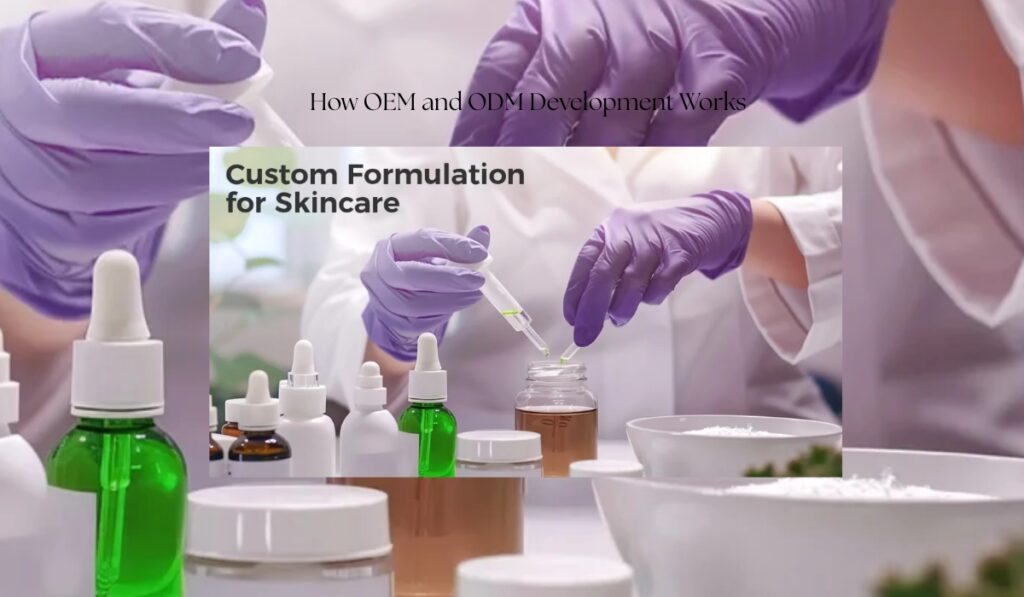
Custom skincare formulation refers to the process of developing personalized skincare products based on brand requirements, target markets, and product positioning.
Unlike standard private label manufacturing, custom formulation focuses on creating differentiated products with unique ingredient combinations and performance goals.
Brands commonly request customization for:
Texture and sensory feel
Target skin concerns
Ingredient systems
Fragrance preferences
Product performance claims
This approach is widely used for premium skincare lines and brands seeking stronger market identity.
2. OEM vs ODM Formulation Development
Custom formulation projects are usually divided into OEM and ODM development models.
OEM skincare manufacturing often starts with existing base formulas that can be modified according to brand requirements.
ODM skincare manufacturing involves developing entirely new formulations from scratch.
The right model depends on:
Budget
Timeline
Customization level
Brand strategy
For a deeper understanding of these manufacturing models, you can explore this guide:
Private Label Skincare vs OEM vs ODM Explained 2026
3. Ingredient Selection in Modern Skincare Formulation
Ingredient selection is one of the most important stages of formulation development.
In 2026, skincare brands increasingly focus on:
Clinically supported ingredients
Barrier repair systems
Microbiome-friendly formulations
Plant-based actives
Sensitive skin compatibility
Popular ingredients include:
Niacinamide
Peptides
Ceramides
Hyaluronic acid
Panthenol
Ingredient selection directly affects formulation stability, production cost, and market positioning.
For brands evaluating current market opportunities, you can also explore skincare trends here:
Top Skincare Trends 2026: What Products Brands Should Develop Next
4. Formulation Testing and Stability Evaluation
Before mass production begins, skincare formulations must go through extensive testing procedures.
This typically includes:
Stability testing
Compatibility testing
Microbial testing
Packaging interaction testing
Testing ensures that products remain stable and safe during transportation, storage, and consumer use.
Products with active ingredients or complex delivery systems often require longer testing cycles.
5. Packaging Compatibility in Formula Development
Packaging and formulation development must work together.
Some active ingredients react differently depending on packaging materials and air exposure.
For example:
Vitamin C formulas may require airless packaging
Retinol products often need UV-protective containers
Capsule skincare requires specialized filling systems
Packaging compatibility affects both product performance and shelf stability.For more insights into packaging strategies, you can refer to this guide:
Skincare Packaging Trends 2026: How Packaging Affects Brand Success
6. Cost Factors in Custom Formulation Projects
Custom formulation projects usually involve higher development costs compared to standard private label products.
Major cost factors include:
Ingredient sourcing
R&D development
Testing procedures
Packaging customization
Production scale
However, custom products also provide stronger brand differentiation and higher market positioning potential.
You can explore detailed skincare manufacturing cost factors here:
How Much Does It Cost to Manufacture Skincare Products in 2026?
7. How Manufacturers Support Custom Formulation
Professional skincare manufacturers play a major role throughout the formulation process.
A strong OEM/ODM manufacturer should provide:
R&D laboratory support
Ingredient sourcing capability
Formula optimization
Compliance assistance
Scalable production systems
At Opseve, we provide full custom skincare formulation services supported by experienced R&D teams and integrated OEM/ODM manufacturing systems.
You can learn more about our manufacturing capabilities here:
8. Choosing the Right Formulation Strategy for Your Brand
Not every skincare brand needs highly complex custom formulations in the early stage.
Brands should evaluate:
Target market positioning
Product uniqueness requirements
Budget limitations
Launch timeline
Long-term scalability
Many successful beauty brands start with optimized OEM formulas before gradually transitioning into more advanced custom ODM development.
Conclusion
Custom skincare formulation services help brands create differentiated products that align with modern consumer expectations and market trends.
From ingredient selection to stability testing and scalable production, formulation development is a critical part of building a successful skincare brand in 2026.
Working with an experienced OEM/ODM skincare manufacturer ensures smoother product development, stronger quality control, and better long-term growth potential.