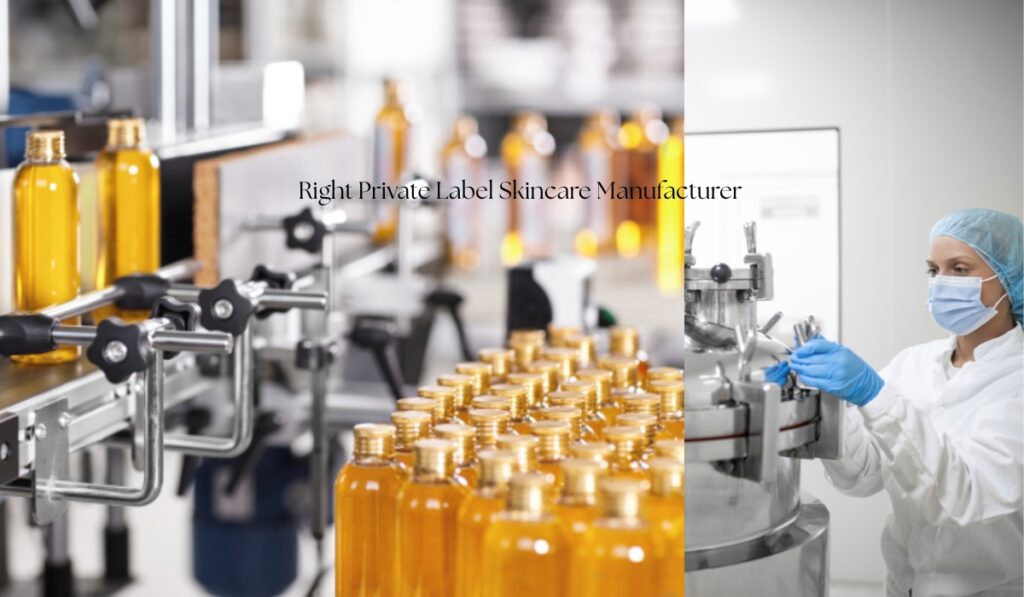
China remains one of the world’s largest skincare manufacturing centers in 2026. With advanced production capability, mature supply chains, and competitive costs, many global beauty brands choose Chinese OEM and ODM factories for skincare product development.
However, choosing the right private label skincare manufacturer in China is not simply about finding the lowest price supplier. The right manufacturing partner directly affects product quality, formulation stability, packaging consistency, lead time, and long-term brand growth.
For skincare startups and growing beauty brands, understanding how to evaluate a manufacturer properly can significantly reduce development risk and improve market competitiveness.
1. Understand Your Brand Needs Before Contacting Factories
Before searching for a skincare manufacturer, brands should first clarify their own product strategy.
Important questions include:
What product category are you developing
What is your target market
Do you need OEM, ODM, or private label services
What is your target price range
What is your expected MOQ
A clear development direction helps manufacturers provide more accurate production recommendations and pricing structures.
If you are still planning your product structure, you can explore different skincare product categories here:
Best Skincare Product Categories for Private Label Brands in 2026
2. Check Whether the Manufacturer Is a Real Factory
One of the biggest mistakes brands make is working with trading companies instead of actual manufacturers.
A real skincare factory usually has:
Production workshops
R&D laboratories
Quality control systems
Manufacturing certifications
Stable production teams
Manufacturers with real production facilities provide better transparency, stronger quality control, and more stable delivery schedules.
At Opseve, we operate a 35,000㎡ skincare manufacturing facility with integrated OEM/ODM production capabilities. You can learn more about our factory here:
3. Evaluate OEM and ODM Capabilities
Not all skincare manufacturers provide the same level of development support.
Some factories only provide basic filling services, while professional OEM/ODM manufacturers support:
Formula development
Ingredient optimization
Packaging customization
Sampling and testing
Large-scale production
Brands planning long-term growth should prioritize manufacturers with strong R&D and customization capability.
For a better understanding of OEM and ODM differences, you can refer to this guide:
Private Label Skincare vs OEM vs ODM Explained 2026
4. Review Product Categories and Manufacturing Experience
A reliable skincare manufacturer should have experience across multiple product categories.
This may include:
Facial serums
Creams and lotions
Body care products
Facial masks
Capsule skincare products
Different product types require different formulation systems and production technologies.
For example, skincare capsule products require more specialized filling and sealing processes than traditional creams or serums.
You can explore our skincare product categories here:
5. Ask About MOQ and Production Flexibility
MOQ is one of the most important factors for new skincare brands.
Some manufacturers only focus on large-volume orders, while others provide flexible low MOQ solutions for startups.
In 2026, flexible manufacturing capability is becoming increasingly important because brands often prefer to test products before large-scale expansion.
A professional skincare manufacturer should be able to support both small trial production and scalable mass production.
6. Verify Certifications and Compliance Standards
Global skincare markets require strict manufacturing standards.
Important certifications include:
ISO22716
GMP compliance
FDA-related export experience
EU cosmetic regulation understanding
These standards help ensure product safety, documentation accuracy, and smoother international distribution.
Compliance capability is especially important for brands targeting Europe and North America.
7. Evaluate Communication and Development Efficiency
Good communication is one of the most underestimated factors in OEM/ODM cooperation.
A strong manufacturer should provide:
Fast response times
Clear production timelines
Professional formulation suggestions
Transparent pricing structures
Efficient communication significantly reduces development delays and improves project management efficiency.
8. Compare Long-Term Partnership Potential
Choosing a skincare manufacturer should not be treated as a short-term purchasing decision.
The best manufacturing partners help brands with:
Product line expansion
Trend analysis
Packaging upgrades
Cost optimization
Scalable production planning
As brands grow, manufacturing capability becomes increasingly important for maintaining quality consistency and stable supply.
You can also explore current skincare market directions here:
Top Skincare Trends 2026: What Products Brands Should Develop Next
Manufacturing Insight
At Opseve, we provide full OEM/ODM skincare manufacturing services for global beauty brands, including formulation development, packaging customization, sampling, and large-scale production.
With over 25 years of manufacturing experience and integrated production systems, we help brands develop market-ready skincare products efficiently and safely.
Conclusion
Finding the right private label skincare manufacturer in China in 2026 requires more than comparing prices.
Brands should evaluate manufacturing capability, product experience, certifications, communication efficiency, and long-term cooperation potential.
Working with an experienced skincare manufacturer ensures stronger product quality, smoother development processes, and better support for global market expansion.